Replacing a worn link arm or linkage part puts a simple question in front of you: new, or used? Reaching for new out of habit is easy, but it is not always the right spend. On plenty of machines a used part does the job just as well, and the money you keep goes toward something that actually needs it.
The real answer to when to buy used linkage parts is not a blanket rule. It turns on two things: the shape the used part is in, and where the machine sits in its working life. Nail those two and the call gets easy. This piece walks through both, plus the handful of cases where a new part earns its keep instead.
It Starts With the Condition of the Part
More than anything else, a used linkage part lives or dies on its condition. A sound one can outlast the machine it goes on. A tired one is a repeat job waiting to happen. So before the machine even enters the picture, the part itself has to clear the bar.
This is the step a lot of buyers skip, and it is the one that matters most. A good used link arm or linkage component shows clean, true mounting points, no cracks or gouges at the stress areas, bores that are not egged out, and pins and bushings that are tight or easy to refresh. Surface rust and cosmetic scuffs are nothing. Bent metal, heat marks, or weld repairs in the wrong spots are everything.
When the condition checks out, used stops being a gamble and becomes a smart buy. That is the whole idea behind real linkage value: not the lowest number on a screen, but a solid part at a fair price. When it does not check out, no price is low enough.
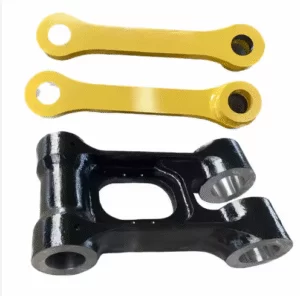
For linkage components, Advantage Construction Equipment & Parts offers new aftermarket plus quality used and rebuilt options for CAT, Komatsu, Volvo, and more, so the part you walk away with is one worth bolting on.
Then Look at the Machine
A sound part is half the decision. The other half is the machine it goes on, because the smartest buy on a ten-year-old loader is not the same as the one on a near-new excavator.
Line the part up with where the machine is headed:
- A machine winding down. If the loader or excavator has a known stretch left, a used part fits that runway cleanly. Spending new-part money on a machine you will retire soon is spending you never get back.
- A spare or part-time machine. Equipment that only runs occasionally does not need the longest-lasting part made. It needs to start when you call on it, and a sound used part handles that.
- A machine you need back today. When downtime is the real cost, an available used part that gets you running beats waiting on anything else.
- An older or orphan model. Where new parts are thin on the ground, a good used component is often the straightest path to keeping the machine productive at all.
In each of these, used is not the budget option. It is the right-sized one. The part suits the machine and the job at hand, and that fit is where the savings turn real instead of risky.
When a New Part Earns Its Keep
Fairness cuts both ways, so here is where new wins. A used part is not always the move, and knowing the exceptions keeps you out of trouble.
Take a workhorse you lean on hard every day, with years of work still planned, and a new aftermarket linkage part makes sense. You want a full service life ahead, not a question mark, on the machine that carries your heaviest load. Same for a lone unit with no backup, where a failure stops the whole job and the certainty earns its cost.
There is also the condition angle in reverse. If you cannot get eyes on the used part or confirm it is sound, and a failure here would be costly or dangerous, new removes the doubt. A used part is a smart buy when you can trust its condition. When you cannot, a new one is low-cost insurance.
None of this makes new the default. On most routine linkage replacement jobs, a sound used or rebuilt part is the stronger value, the same logic that holds across drivetrain and undercarriage parts. New is the right tool for the heavy-use, no-backup, or can-not-inspect cases, not for every job.
A Quick Gut Check Before You Buy
Before you commit, run the decision through three fast questions you can answer standing next to the machine.
- Is the part sound? Clean mounting points, no cracks or bends at the stress areas, serviceable pins and bushings. If yes, used is in play. If you cannot tell, lean new.
- How much machine is left? Lots of hard years ahead leans new on a machine you count on. A defined runway, a spare, or a quick turnaround leans used.
- What does a failure cost here? Low stakes, used is plenty. High stakes with no backup, pay for the certainty.
Answer those three honestly and the right choice falls out almost every time. On most machines, a sound part points you toward used without much drama.
The Case for Used, Kept Simple
Strip it down and buying smart on linkage is not complicated. A sound used part on a machine whose life matches it is one of the easiest ways to keep a loader or excavator earning without overspending. The savings are real, the quality is there when the part checks out, and you are not tying up cash a machine will never pay back.
That is the heart of buying used heavy equipment parts the right way. Not chasing the lowest sticker, and not defaulting to new because it feels safe, but matching a sound part to the machine in front of you. Do that and used is the sharp call, not a compromise.
Get the Linkage Part Your Machine Needs
Once you have sized up the part and the machine, a broad parts source makes the rest easy. Advantage Construction Equipment & Parts supplies heavy equipment replacement parts and ships to any state, so the right component reaches you whether the machine is in your yard or three states over. Past twenty years at this trade, operators here get sound parts and straight answers rather than a runaround.
Get in touch with your make, model, and the part on your list, and the team will help you lock in the right one.
FAQ: Buying Used Linkage Parts
When is it worth buying used linkage parts instead of new?
It comes down to the part and the machine. Used linkage parts are worth it when the component is sound, clean mounting points, no cracks or bends, serviceable pins and bushings, and the machine has a sensible amount of life left. That covers winding-down machines, spares, quick turnarounds, and older models where new parts are scarce. The time to lean new is a hard-worked primary machine, a no-backup setup, or a part you cannot inspect.
How do I tell if a used link arm is any good?
Look at the stress points first. A good used link arm has true, clean mounting points, no cracks, gouges, or bends where the load concentrates, and bores that are not worn oval. Pins and bushings should be tight or easy to refresh. Surface rust and cosmetic marks do not matter. Heat discoloration, bent metal, or weld repairs in load-bearing spots are deal breakers. If you cannot get a clear look at the part, treat that uncertainty as a reason to consider new instead.
Are used linkage parts lower quality than new ones?
No. A sound used part is a quality part that saves you real money, not a downgrade. The difference is not quality, it is service life and fit to the job. On a machine whose remaining hours match the part, a used component does exactly what a new one would for far less outlay. A used linkage part that checks out mechanically performs the same way a new one does. Quality problems come from buying a worn part, not from buying used itself.
When should I just pay for a new linkage part?
Pay for new when the machine anchors your operation and you will work it hard for years, when it is your only machine and a failure stops everything, or when you cannot inspect the used part and the job leaves no room for a surprise. In those cases the certainty of a full service life ahead is worth the spend. For routine linkage replacement on machines with a defined runway or a backup standing by, a sound used or rebuilt part is usually the smarter value.
Where can I buy used linkage parts for my loader or excavator?
Advantage Construction Equipment & Parts supplies linkage components for CAT, Komatsu, Volvo, and more, in new aftermarket plus quality used and rebuilt form, shipped across the country. You get sound parts matched to your machine rather than a gamble, which is the whole point of buying used heavy equipment parts the right way. Send along your make, model, and what you need, and the team will help find the right component.